Showing posts with label Scout House. Show all posts

Monday, May 19, 2014

America's Best Small Towns to Visit, SMITHSONIAN MAGAZINE

SMITHSONIAN MAGAZINE features “America's Best Small Towns to Visit” 2012, 2013 and 2014. SMITHSONIAN “worked with the geographical information systems company Esri, which analyzed tons of data to find towns or cities of fewer than 15,000 residents where cultural opportunities abound, at least on a per capita basis” in 2014.


1. Chautauqua, NY
2. Healdsburg, CA
3. Williamsburg, VA
4. Steamboat Springs, CO
5. Woods Hole, MA
6. Marietta, OH
7. Beaufort, SC
8. Sedona, AZ
9. Nebraska City, NE
10. Lanesboro, MN
11. Spring Green, WI
12. Havre de Grace, MD
13. Columbia, PA
14. Mount Dora, FL
15. Ketchum, ID
16. Montpelier, VT
17. Harrodsburg, KY
18. Silver City, NM
19. Decorah, IA
20. The Dalles, OR

The 20 Best Small Towns to Visit in 2013, SMITHSONIAN “sought a statistical answer to this question by asking the geographic information company Esri to search its databases for small towns and cities—this time, with populations of less than 15,000—that have exceptional concentrations of museums, art galleries, orchestras, theaters, historic sites and other cultural blessings.”


1. Gettysburg, PA
2. Cleveland, MS
3. St. Augustine, FL
4. Baraboo, WI
5. Astoria, OR
6. Petoskey, MI
7. Fairfield, IA
8. Los Alamos, NM
9. Sitka, AK
10. Provincetown, MA
11. Galena, IL
12. Sausalito, CA
13. Hanover, NH
14. Oberlin, OH
15. Jackson, WY
16. Lexington, VA
17. Abilene, KS
18. Lihue, HI
19. Fredericksburg, TX
20. Glenwood Springs, CO

The 20 Best Small Towns in America of 2012, SMITHSONIAN “asked the geographic information systems company Esri to search its data bases for high concentrations of museums, historic sites, botanic gardens, resident orchestras, art galleries and other cultural assets common to big cities. But we focused on towns with populations less than 25,000, so travelers could experience what might be called enlightened good times in an unhurried, charming setting.”


1. Great Barrington, MA Big-city smart meets New England natural in an art-rich mountain setting.
2. Taos, NM Modern art, ancient history and counter culture in the luminous high desert.
3. Red Bank, NJ Willie Nelson sings and Basie swings in a riverfront town graced by Victoriana.
4. Mill Valley, CA A Bay Area enclave that put mellow on the map keeps its funky vibe.
5. Gig Harbor, WA Take numerous art galleries. Add sailboats and local wines. Stir. Enjoy.
6. Durango, CO All aboard for mountain fun, plus classical tunes and—gasp—vaudeville.
7. Butler, PA An old-time rural hub as down-to-earth as its most famous product—the Jeep
8. Marfa, TX With mock couture, edgy movies and ironic motels, it’s no cow town.
9. Naples, FL World-class music, design to die for and palm trees
10. Staunton, VA A Shenandoah mix of Confederate relics and Elizabethan theater.
11. Brattleboro, VT
12. Princeton, NJ
13. Brunswick, ME
14. Siloam Springs, AR
15. Menomonie, WI
16. Key West, FL
17. Laguna Beach, CA
18. Ashland, OR
19. Beckley City, WV
20. Oxford, MS 

The City of Carmel-by-the-Sea touts “Travel+Leisure magazine recently recognized Carmel-by-the-Sea as one of the most romantic cities in the world - ahead of Florence, Italy and just behind Paris and Venice. In 2013, Conde Nast Traveler readers ranked Carmel as their 6th favorite city in the United States” on the City’s website. Alas, residents and visitors of the City would be better served by city government if the city council and city administration emulated Smithsonian Magazine’s “Best Small Towns to Visit.” Accordingly, if the city council and city administrator were less concerned about budget presentation awards and financial balance sheets and more concerned with the maintenance, upkeep and accessibility of all of Carmel-by-the-Sea's historical, cultural and environmental assets, then perhaps Carmel-by-the-Sea would deserve to be on Smithsonian Magazine’s list of the “Best Small Towns to Visit.”

Wednesday, March 24, 2010

SIGNIFICANT, UNACCOMPLISHED PROJECTS/ACHIEVEMENTS BETWEEN 2000-2010

ABSTRACT: In endorsements of Mayor Sue McCloud for a sixth term, various advocates cite accomplishments between 2000 and 2010. However, most of these “accomplishments” were either begun prior to McCloud’s mayoral election (Sunset Center Renovation), delayed realization due to city actions (Fourth Street Riparian Habitat Project), legally mandated requirements (Local Coastal Program (LCP), updated General Plan elements) and common standard procedures and practices of all cities (televised Council meetings, boxes at the Post Office with commission and board agendas, City website, State of the City reports). Arguably then, many other and more significance projects should have been realized between 2000 and 2010. A LIST OF SIGNIFICANT, UNACCOMPLISHED PROJECTS/ACHIEVEMENTS BETWEEN 2000-2010 is presented.

A LIST OF SIGNIFICANT, UNACCOMPLISHED PROJECTS/ACHIEVEMENTS BETWEEN 2000-2010:

• Public Safety Issue: Carmel Fire Department Fire Protection Services

In the context of the 2007 Citygate Associates Fire Department Consolidation Feasibility Analysis for the Cities of Monterey, Pacific Grove and Carmel, Final Report, the City has delayed meaningful discussion of options and implementation of a long-term solution with regard to this critical public safety issue.

• Community Planning & Building Director Position

While the City expended taxpayer monies to consultant Ralph Andersen & Associates to aid in the recruitment of a Community Planning & Building Director, that critical position remains vacant with no indication that the City is actively engaged in trying to hire a Community Planning & Building Director.

• Infrastructure of Streets, Roads & Avenues

While Nichols Consulting Engineers recommended the City expend $660,000 annually to maintain Carmel’s streets at their then current state, the City has failed to budget the minimum recommended amount from the General Fund. In fact, the City expended $516,000 on street projects in FY 2008/2009, but most of that allocation was from external and grant sources. Moreover, the Carpenter Street segment between 2nd Av. and Ocean Av., a gateway street to the city, should have been repaved or reconstructed long ago.

• Publicly Inaccessible or Unkempt Public Assets

The City has not maintained, upgraded or implemented ADA improvements to The Scout House (Mission St & 8th Av., N.E. Corner); the Public Works building (E/s Junipero Av. between 4th Av. & 5th Av.) is inaccessible to the public; Flanders Mansion parkland/property is inaccessible to the public; and Rio Park and Mission Trail Nature Preserve are not maintained as viable city parks.

• Beach Maintenance and Shoreline Protection

Implementation of policies set forth in the Land Use Plan Coastal Resource Management Element with regard to maintenance and repairs of Carmel’s seawalls (constructed in 1958, 1976, 1978, 1982, 1984 and 2001), retaining walls and engineered rock revetments to protect the City’s shorelines bluffs, public amenities along the bluff top, including the Beach Bluff Pathway, private property, et cetera. As stated in the LUP, If left unmanaged, the bluffs surrounding Carmel Bay would progressively erode from the impact of winter storm waves, surface drainage and other steady and episodic erosion processes. This natural process would eventually erode the bluffs up to the City’s beach access stairways and the Beach Bluff Pathway. Eventually, Scenic Road and the adjacent homes would be threatened as well.
(Source: General Plan/Coastal Land Use Plan Coastal Resource Management Element)

• Permanent Restrooms at Carmel Beach along Scenic Road

The construction phase for a permanent restroom needs to be completed expeditiously. In fact, arguably another permanent restroom between Del Mar Av. and Santa Lucia Av. should be considered. The City should not expend taxpayer monies for tourist promotion and marketing and then not adequately provide for tourists and visitors.

• Urbanized Forest, Parks and Open Spaces

Implementation of the policies set forth in the Land Use Plan Coastal Resource Management Element with regard to Carmel’s forest, parks and open spaces, including the Environmentally Sensitive Habitat Areas, including Pescadero Canyon, Mission Trail Nature Preserve and Carmel Beach, are necessary. Moreover, the City of Carmel-by-the-Sea Forest Management Plan (2001) (FMP), providing specific direction and guidelines for the maintenance and enhancement of Carmel’s urbanized forest, should be more vigorously implemented. For example, the Total Number of Public Trees in Carmel’s Urbanized Forest declined 3.4% from 1981-1984 to 2005-2008, including a 32.0% decline in the Monterey Pine and the Number of Public and Private Trees in Carmel’s Urbanized Forest declined 5.6%, including a 20.4% decline in the Monterey Pine, one of Carmel’s signature trees. As stated in the LUP,: To many, the “urbanized” forest is the character-defining feature that makes Carmel-by the-Sea so unique. The forest, along with the beach and ocean, is the City’s largest and most visible natural resource. And Upper canopy trees impart a distinctive ambiance and identity to the City. More must be done to ensure a healthy, regenerating and diverse “urbanized” forest, as stated in the LUP: “Steps must be taken to minimize the threat to existing healthy Monterey pines and new seedlings to ensure continued diversity in species, age, and location.”
(Sources: General Plan/Coastal Land Use Plan Coastal Resource Management Element, General Plan/Coastal Land Use Plan Open Space and Conservation Element

• Forest Theatre Renovation

In the context of the City’s Forest Theater Facility Master Plan, 2001, the City Council failed to budget for and implement in phases the Forest Theatre Facility Master Plan. More recently, the City has failed to place on a public agenda William Camille’s final report on construction phasing and cost estimates of the Forest Theatre Schematic Design completed by R. F. McCann & Company Theatre Architects even though the City originally informed the public renovation construction would be completed by the Forest Theatre Centennial in 2010.

• Harrison Memorial Library Main Branch

Arguably, one of the most important community assets to Carmelites, library operating hours should be restored on Sundays. With the Library open 42 hours a week, Saturday hours of 1:00 P.M. -5:00 P.M. should, at a minimum, be instituted for Sundays.

• Sunset Center

In the context of the disproportionate amount of approximately $9.0 million of taxpayers monies expended for the Sunset Center, including payments for management of the Sunset Center to Sunset Cultural Center, Inc. (SCC), maintenance requirements and debt service, between 2004 and 2010, relative to other entertainment venues in the City, there should be a discussion about the future of the Sunset Center, Forest Theatre, Scout House and Youth Center, specifically given the fact that many more out-of-towners compared to Carmel-by-the-Sea residents purchase tickets, attend events and perform at the Sunset Center compared to the Forest Theatre, Scout House and Youth Center.

REFERENCE:
VOTE McCLOUD Ad, Re-Elect Mayor McCloud, PO Box M-1, Carmel-by-the-Sea, CA 93921 Dick Stewart, Treasurer, The Carmel Pine cone, March 19, 2010, 13A

OTHER SOURCE:
CITYWATCH, CARMEL RESIDENTS ASSOCIATION NEWS March 2010

Wednesday, July 09, 2008

ABYSMAL CITY STEWARDSHIP OF CITIZEN ASSETS

ABSTRACT: Under the mayorship of Sue McCloud, the City of Carmel-by-the-Sea has an abysmal record of stewardship of citizen assets. Specifically, public assets inaccessible to the public, including the Scout House and Flanders Mansion; underutilized assets, including Rio Park; under maintained assets, including Mission Trail Nature Preserve, Forest Theatre and Carmel Beach; and art collection assets unknown to citizens. Information regarding City expenditures for the City’s ART COLLECTION and SCOUT HOUSE between December 2006 and June 2008 is presented. A COMMENT is made.

• ART COLLECTION: Between December 2006 and June 2008, the City of Carmel-by-the-Sea expended a total of $49,892.54 on the City’s ART COLLECTION, including $46,475.00 to E. OSTERKAMP APPRAISALS for INVENTORY/APPRAISALS OF ART COLLECTION, $2,880.00 to FACL, INC. for CONSERVATION OF OIL PAINTING AT HARRISON MEMORIAL LIBRARY, $500.00 to SHERYL NONNENBERG for PROFESSIONAL SERVICES and $37.54 to Sue McCloud for REIMBURSEMENT FOR ART INVENTORY PROJECT VIDEO, according to the City’s Check Registers.

111929 12/5/06 E.OSTERKAMP APPRAISALS $ 250.00 INVENTORY OF ART COLLECTION
111990 12/12/06 E.OSTERKAMP APPRAISALS $ 2,500.00 INVENTORY OF ART COLLECTION
----Vendor Total---- $ 2,750.00

112109 1/5/07 E.OSTERKAMP APPRAISALS $ 1,500.00 INVENTORY/APPRAISALS OF ART COLLECTION
112217 1/23/07 E.OSTERKAMP APPRAISALS $ 2,000.00 INVENTORY/APPRAISALS OF ART COLLECTION
----Vendor Total---- $ 3,500.00

112339 2/6/07 E.OSTERKAMP APPRAISALS $5,000.00 INVENTORY/APPRAISALS OF ART COLLECTION

112491 2/27/07 E.OSTERKAMP APPRAISALS $ 9,900.00 INVENTORY/APPRAISALS OF ART COLLECTION
112667 3/20/07 E.OSTERKAMP APPRAISALS $ 7,500.00 INVENTORY/APPRAISALS OF ART COLLECTION
----Vendor Total---- $ 17,400.00

112782 4/10/07 E.OSTERKAMP APPRAISALS $ 6,250.00 INVENTORY/APPRAISALS OF ART COLLECTION

112917 5/1/07 E.OSTERKAMP APPRAISALS $ 1,500.00 INVENTORY/APPRAISALS OF ART COLLECTION

113161 6/5/2007 E.OSTERKAMP APPRAISALS $ 5,000.00 INVENTORY/APPRAISALS OF ART COLLECTION
113275 6/19/2007 E.OSTERKAMP APPRAISALS $ 5,075.00 INVENTORY/APPRAISALS OF ART COLLECTION
----Vendor Total---- $ 10,075.00

113336 6/26/07 SHERYL NONNENBERG $ 500.00 PROFESSIONAL SERVICES-CITY ART COLLECTION

113596 8/7/07 SUE MC CLOUD $ 37.54 REIMBURSEMENT FOR ART INVENTORY PROJECT VIDEO

113904 9/25/07 FACL, INC. $ 2,880.00 CONSERVATION OF OIL PAINTING AT HARRISON MEMORIAL LIBRARY

• SCOUT HOUSE: Between December 2006 and June 2008, the City of Carmel-by-the-Sea expended a total of $3,100 on the SCOUT HOUSE, specifically an APPRAISAL FEE.

112963 5/8/07 INDEPENDENT REAL ESTATE $ 3,100.00 SCOUT HOUSE APPRAISAL FEE

COMMENT:
• Abysmal city stewardship of public assets is evident in the majority of historical, cultural and environmental public assets being inaccessible, underutilized, under maintained and unknown to Carmelites. A city government with a ethic of stewardship, contrary to the city government of Carmel-by-the-Sea presently, would have budgeted annually for improvements, upgrades and ADA compliance measures to the Scout House so that user groups could utilize the community facility; would have budgeted annually for maintenance and improvements to the Flanders Mansion prior to a Superior Court Judge ordering the City to maintain Flanders Mansion per the Municipal Code and found a compatible public use for the Flanders Mansion; would have budgeted annually for the maintenance of Mission Trail Nature Preserve, Forest Theatre and Carmel Beach for the enjoyment of residents and visitors alike; and would have placed the City’s Art Collection Inventory on the City’s website and held exhibitions for the benefit of Carmelites so that Carmelites would be aware of their artistic assets, et cetera.

Monday, April 21, 2008

Classic Example of Poor City Management

ABSTRACT: Selected, relevant excerpts from the City’s ADOPTED BUDGET FISCAL YEARS 2007/08 THROUGH 2009/10 regarding the Forest Theatre are reproduced. COMMENTS are made with respect to the ADOPTED BUDGET, the Forest Theatre, Scout House and statements made by public speakers and City Council Member Ken Talmage at the City Council Budget Meeting on April 17, 2008.

Selected excerpts from the City’s ADOPTED BUDGET, as follows:

CITY OF CARMEL-BY-THE-SEA
CALIFORNIA
ADOPTED BUDGET
FISCAL YEARS
2007/08 THROUGH 2009/10


CITY OF CARMEL-BY-THE-SEA WORK PLAN
Department: Community Services
Project: Forest Theater Renovation Plans
Start Date: 4/26/04
Due Date: ongoing
Cost: $ 400,000
Status: Forest Theater Foundation is working with an architect on a pre-design plan. Presentation to Council expected by June 2007. Foundation is fundraising to cover renovation plan costs.

City of Carmel-by-the-Sea
Capital Improvement and Capital Outlay Budgets
FY 2007-08 Thru 2011-12

Revised FY 2008-09
Capital Improvement
Forest Theater ADA Upgrades (design) $50,000

Note:
At the City Council Budget Meeting on April 17, 2008, a public speaker stated the expenditure for the Forest Theatre “design” was now $65,000.

COMMENTS:
• In the City’s ADOPTED BUDGET FISCAL YEARS 2007/08 THROUGH 2009/10, a Capital Improvement for the Forest Theatre in the triennial budget is for “ADA upgrades (design)” of $50,000 in FY 2008/09. For FY 2009/10, there is no expenditure for implementation of the ADA upgrades (design). A City policy of budgeting for “design” without subsequently budgeting for implementation is imprudent and improvident. Similarly, in that ADOPTED BUDGET, there is an “ongoing” item for the “Scout House ADA” from 1999 for a “Feasibility study” without any subsequent monies budgeted for implementation. A pattern of budgeting for designs or studies without budgeting for implementation makes for an incoherent budget document and poor use of taxpayer monies.

• At the City Council Budget Meeting on April 17, 2008, Carmel residents Monte Miller, Carolyn Hardy and Linda Anderson urged the City Council to hold a public meeting or workshop on the Forest Theatre design. Needless to say, no member of the City Council, or the City Administrator, responded positively or negatively to the repeated requests.

• City Council Member Ken Talmage articulated at the City Council Budget Meeting on April 17, 2008 that the "next major capital project for the City is the Forest Theatre," implying that the City could only budget for one "major" capital improvement project at a time and that capital improvement project must be the Forest Theatre. A more prudent and provident approach would be to budget for both the Forest Theatre and Scout House in phases given the fact that the ADA improvements and upgrades for the Scout House are a few hundred thousand dollars, compared with the improvements to the Forest Theatre which represent a multi-million dollar project. Moreover, for the City Council to agree to remove the Scout House from the proposed Budget at that Budget Meeting is a dereliction of their responsibility to citizens to have all public assets maintained, open and available to the public, especially since the Scout House has a long history of being Carmel-by-the-Sea’s “Community Center.”

Wednesday, April 26, 2006

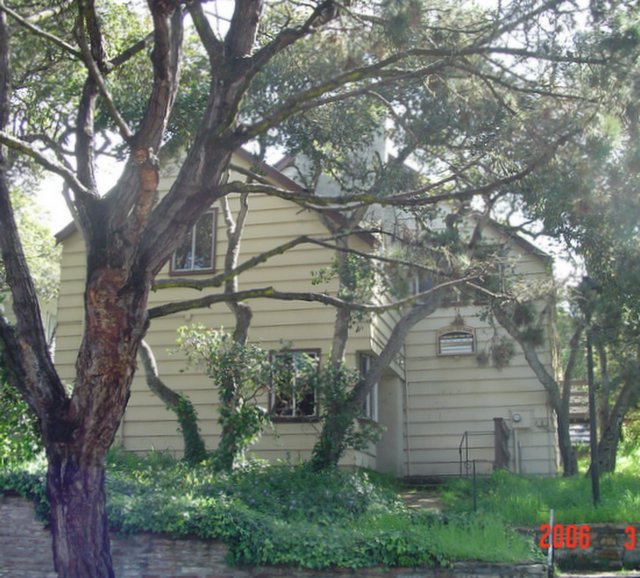
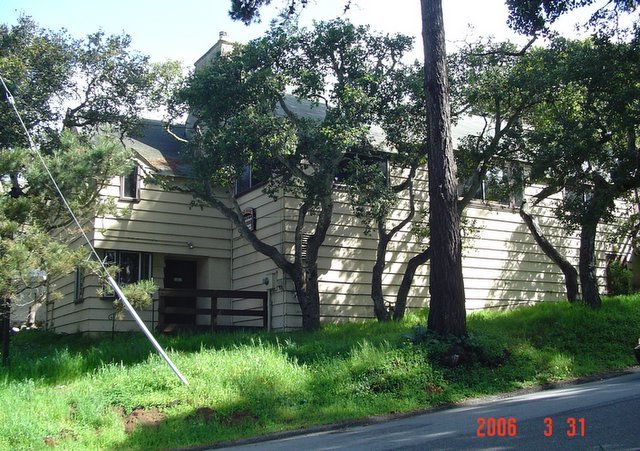
The Scout House

  Posted by Picasa

The POLITICALIZATION of The Scout House

  Posted by Picasa

BACKGROUND:

The City's Local Coastal Program, certified by the California Coastal Commission in November 2004, includes as part of the Land Use & Community Character Element, Cultural Resources & Historic Preservation, an Inventory of Historic Resources and supporting documentation in the form of California Department of Parks and Recreation Historic Resources Inventory Forms (DPR 523s) on each historic residence, commercial building, object and district.

In May 2005, City Administrator Rich Guillen placed a "Consideration of an historic determination for an existing City-owned structure located in the Residential & Limited Commercial District" (Scout House, NE corner Mission & 8th Av.) on the Historic Resources Board's agenda. The Historic Resources Board decided to "place the Scout House on Carmel Historic Resource Inventory" (Ayes: Coss, Henney, Wendt; Noes: Lagerholm; Absent: Holz) Later, in July 2005, Guillen placed the "Consideration of a request to reconsider a previous decision to place a structure on the City's Inventory of Historic Resources" on the Historic Resources Board's agenda. The Historic resources Board reaffirmed their May 2005 decision leaving "the Scout House on the City Historic Register" (Ayes: Coss, Holz, Wendt, Henney; Noes: Lagerholm). Yet months later, City Administrator Guillen pledged to place the item on an upcoming 2006 City Council agenda. And Associate Planner Sean Conroy recently stated that the City Council would decide the Scout House issue soon.

THE DOCUMENTED RECORD:

Architectural historians Kent Seavy and Katherine Gualtieri evaluated the Scout House and determined the Scout House to be an historic resource. Architectural historian Sheila McElroy concluded that the Scout House may be an historic resource if Seavy augmented his original DPR Form 523; Seavy subsequently augmented the Scout House's DPR Form 523. Jones & Stokes, architectural historians, hired by Denise Duffy & Associates, affirmed the Scout House as a historic resource in the Flanders Mansion Property Environmental Impact Report (EIR). And the City Historic Resources Board twice concluded that the Scout House is an historic resource.

Interestingly, while the Scout House IS NOT listed on the latest Inventory of Historic Resources (dated 1/26/06), the Scout House's DPR Form 523 is among the 310 DPRs at the Planning Department, City Hall. Thus, City Administrator Guillen erred in placing the "consideration of an historic determination" and "consideration of a request to reconsider a previous decision" on the Historic Resources Board's May and July 2005 agendas by virtue of Seavy's completed DPR Form 523 on the Scout House; City Administrator Guillen should have followed the procedure for removing a resource from the Inventory. Specifically, City Administrator Guillen should have followed Carmel-by-the-Sea Municipal Code, Chapter 17.32 Historic Preservation, 17.32.070 Maintaining the Inventory D. Removal of Resources from the Inventory.

QUESTIONS:

Despite overwhelming written documentation by architectural historians that the Scout House is an historic resource, City Administrator Rich Guillen placed a "Consideration of a historic determination" and a "Consideration of a request to reconsider a previous decision" on the Historic Resources Board's agendas and pledged to place the item on a 2006 City Council agenda. WHY? Is the Scout House the latest example of a politically-motivated, pre-determined conclusion trumping overwhelming expert evidence?

Friday, March 17, 2006

SCOUT HOUSE INFORMATION

Scout House:
[This description of the Scout House is adapted in part from the California Department of Parks and Recreation Historic Inventory Recordation Form (DPR 523) prepared by Kent Seavey in 2004.]

The Scout House is a two-story, wood frame building with a raised basement and a concrete foundation. Built in 1931, and renovated at least three times, the building is irregular in plan and is stylistically a loose vernacular derivative of the Craftsman idiom. It has a medium pitched gabled roof that is clad with composition shingles. The exterior walls are sheathed with horizontal wood siding and textured stucco. Carmel stone chimneys are located at east and west gable ends of the building. The chimney at the western end of the building has been encased in cement stucco. A two-story, wood-frame addition, built in 1941 on the east elevation, approximates the scale and massing of the rest of the building. Fenestration consists of a variety of aluminum sash windows that replaced the original steel-frame windows. The house is located at the northeast corner of Mission & 8th Streets on a lot that rises steeply from the street level. The Mission and 8th streets corner of the lot is defined by a Carmel stone retaining wall pierced by a set of open Carmel stone stairs that provides access to grounds and building. Mature oaks surround the property.

In 1910, Lord Robert Baden-Powell, founder of the Boy Scouts, visited the Monterey area to promote scouting in the region. Several members of the Boys Club of Carmel, including leader John Neikirk, joined Baden-Powell in a bivouac at the Presidio of Monterey and soon became official Boy Scouts. In 1925, with the sponsorship of Carmel American Legion Post #512, and the help of Douglas H. Greeley, Sr. and Fred Leidig, Carmel’s scouts received an official charter as Troop # 86, Boy Scouts of America. Dr. Amelia Gates donated the Scout House site to the troop so that they could erect a permanent meeting hall. With the assistance of Louis Levinson and F.L. Veatch and the support of the Carmel Pine Cone, Troop #86 succeeded in raising the necessary funds to construct the building. Designed by architect Allan C. Collins, the clubhouse was completed in 1931 by master-builder M.J. Murphy (Seavey 2001).

The Scout House appears to be eligible for listing in the CRHR under Criterion 1 for its importance to the history of Carmel. Since its inception, the residents of Carmel built a strong community base by actively participating in civic, educational, and social activities. The building is a reflection of such civic activities, as the site and construction of the building was made possible through community philanthropic efforts to build a facility for Carmel’s local chapter of Boy Scouts of America. The building is considered significant for its association with the history of Carmel’s community character.

Source: Final Environmental Impact Report for the Sale of Flanders Mansion Property, Prepared by Denise Duffy & Associates, Inc., August 2005, pg. 106.

Wednesday, March 15, 2006

IN SUPPORT OF THE SCOUT HOUSE

At the 7 March 2006 City Council meeting, Carmel-by-the-Sea resident Carol Hilburn stated:

"I noticed that in closed session you're going to be discussing property negotiations for the N.E. corner of Mission & 8th, which I guess is the Scout House. And I just want to say that I feel very privileged to have moved here prior to the Scout House being closed. And being able to enjoy that very special facility. And I hope that in your deliberations in closed session that you will take into consideration how very special this property is. What a fabulous venue it is. And that we should do everything for this community to save that property and not to sell it and not to allow it to be turned into another cookie-cutter development in downtown Carmel."

The City of Carmel-by-the-Sea has an annual budget exceeding $11 million and reserves exceeding $7 million (most cities have 10-15% of their annual budget in reserves). Ergo, it is shameful that the City Council has not annually budgeted for the maintenance, improvements and ADA compliance upgrades to the Scout House.